
Antarctica, a continent for peace

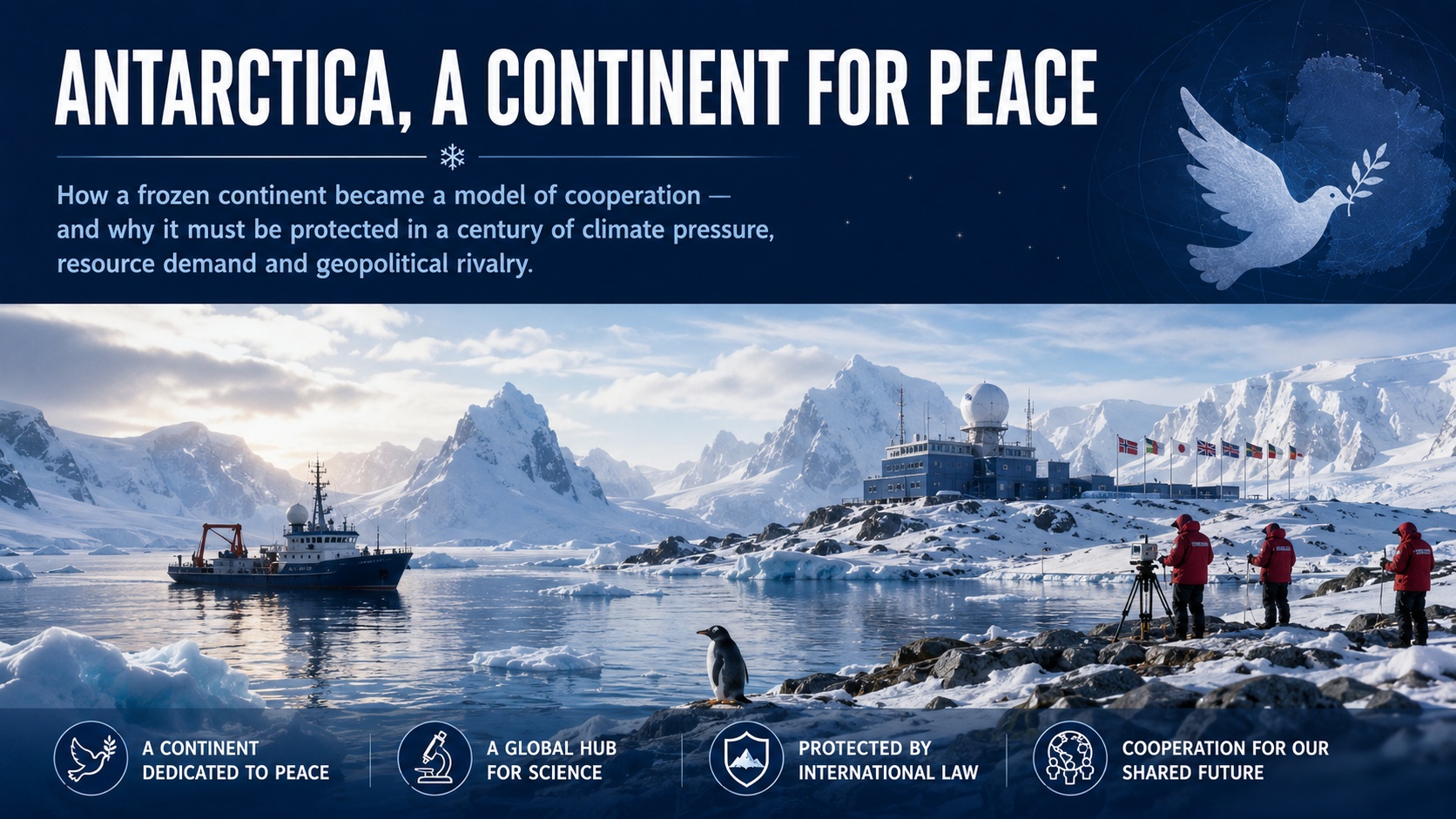
Central question
Can humanity keep Antarctica as a natural reserve devoted to peace and science? The answer depends on the strength of international law, scientific cooperation and the choices made by today’s citizens and tomorrow’s decision-makers.
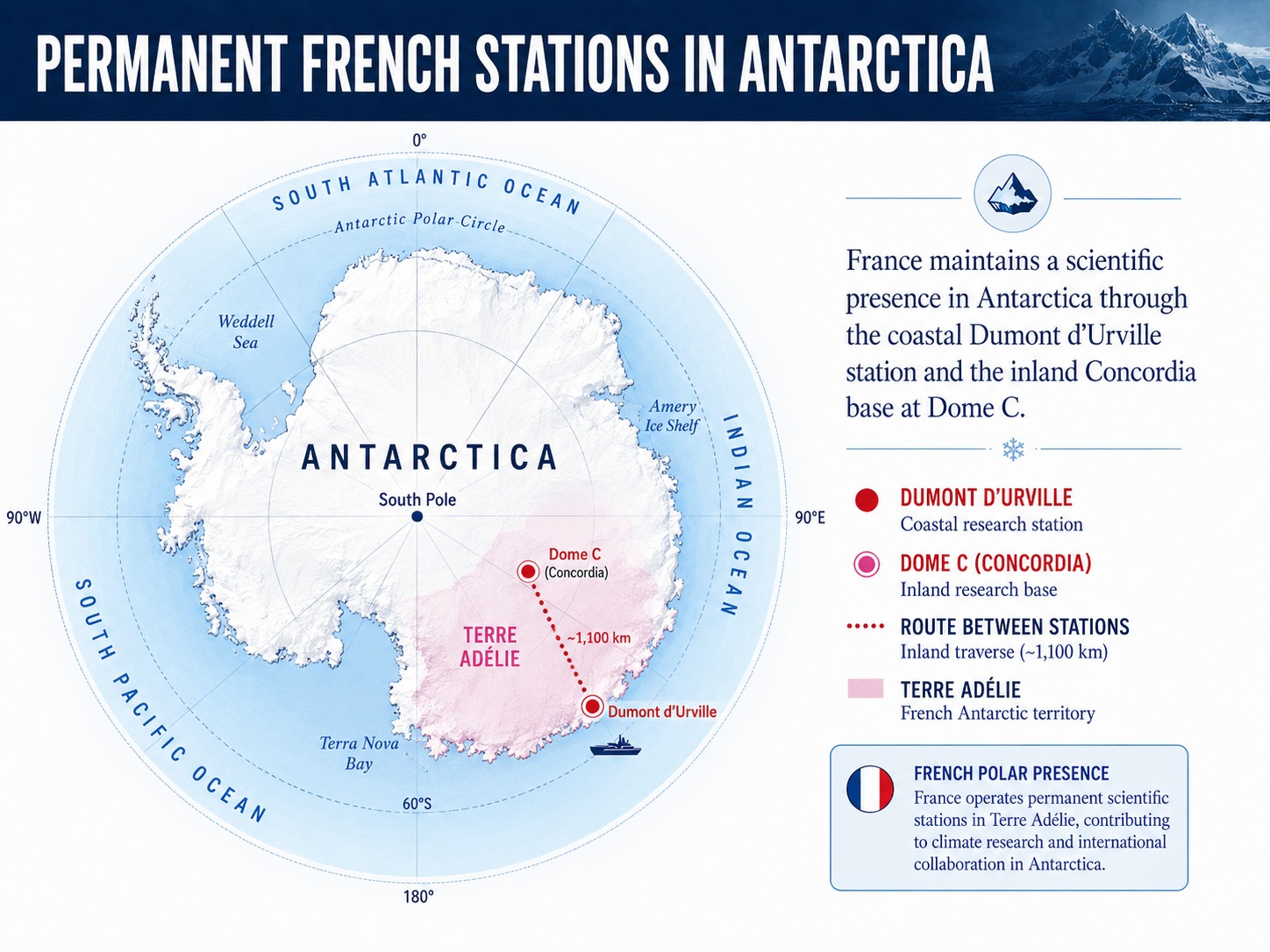
Antarctica as a scientific and geopolitical space. Source: Laurent Mayet / Le Cercle Polaire presentation.
Why Antarctica matters
Antarctica is often imagined as empty, distant and silent. In reality, it is one of the most important political and scientific laboratories on Earth. It is the only continent where states agreed to set aside war, freeze sovereignty disputes and give priority to scientific cooperation.
The Antarctic Treaty parties describe Antarctica as a “natural reserve, devoted to peace and science.” This sentence is more than a slogan: it summarizes a rare diplomatic achievement. During the Cold War, countries with competing interests accepted rules of peace, science and restraint.
However, this exceptional status is not guaranteed forever. Antarctica is protected by law, but it is also exposed to climate change, tourism, resource pressure and geopolitical competition.
Project adviser: Laurent Mayet
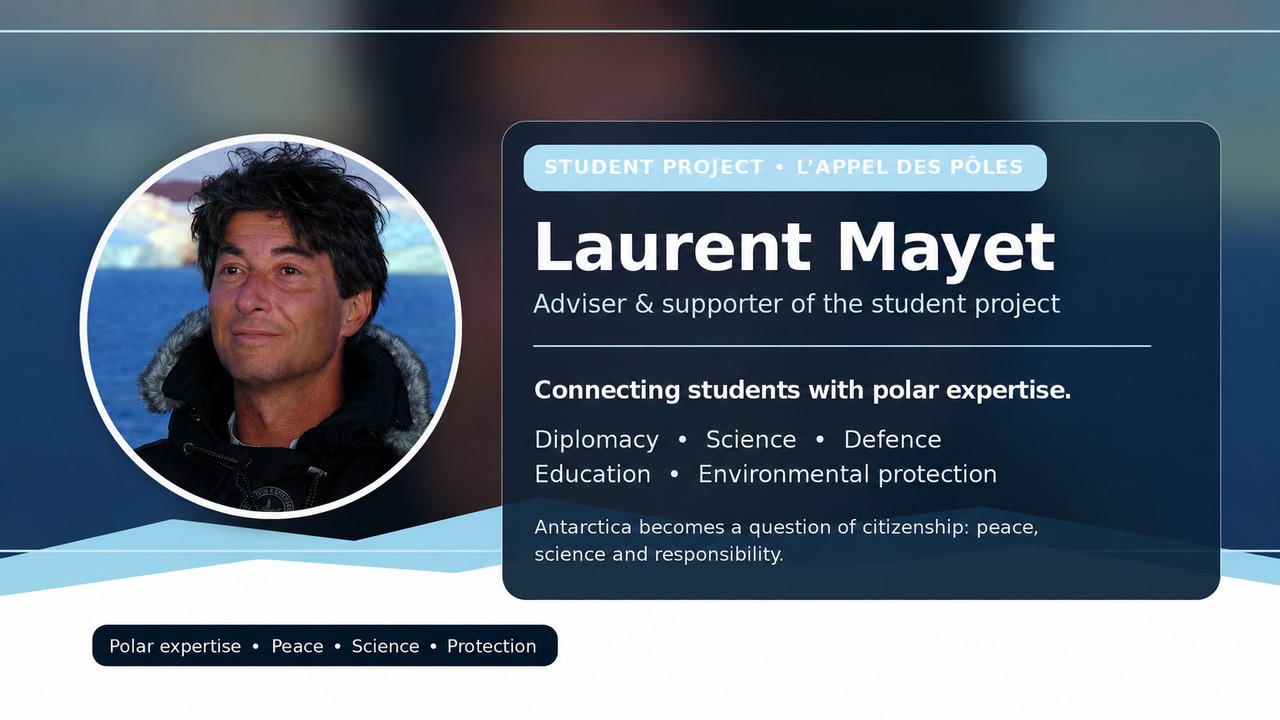
Laurent Mayet is the adviser and parrain of this student project. His contribution connects the contest with real polar expertise, because his work brings together diplomacy, science, defence, education and environmental protection.
He is presented in the project documents as chair of Le Cercle Polaire, a think tank devoted to polar issues and the preservation of polar environments. The report also notes his previous role as Special Representative for Polar Issues at the French Ministry of Foreign Affairs, Senior Reservist in the Navy, and ministerial delegate for Polar Issues at the Ministry of Education.
For students, this support transforms Antarctica from a distant geography topic into a question of citizenship: how can young people defend peace, science and environmental responsibility in a fragile international space?
1. From territorial claims to a frozen peace
The history of Antarctica begins with exploration, discovery and claims. France’s role is highlighted through Admiral Jules Dumont d’Urville, who reached the Antarctic continent in January 1840 and named Adélie Land in honour of his wife Adèle.
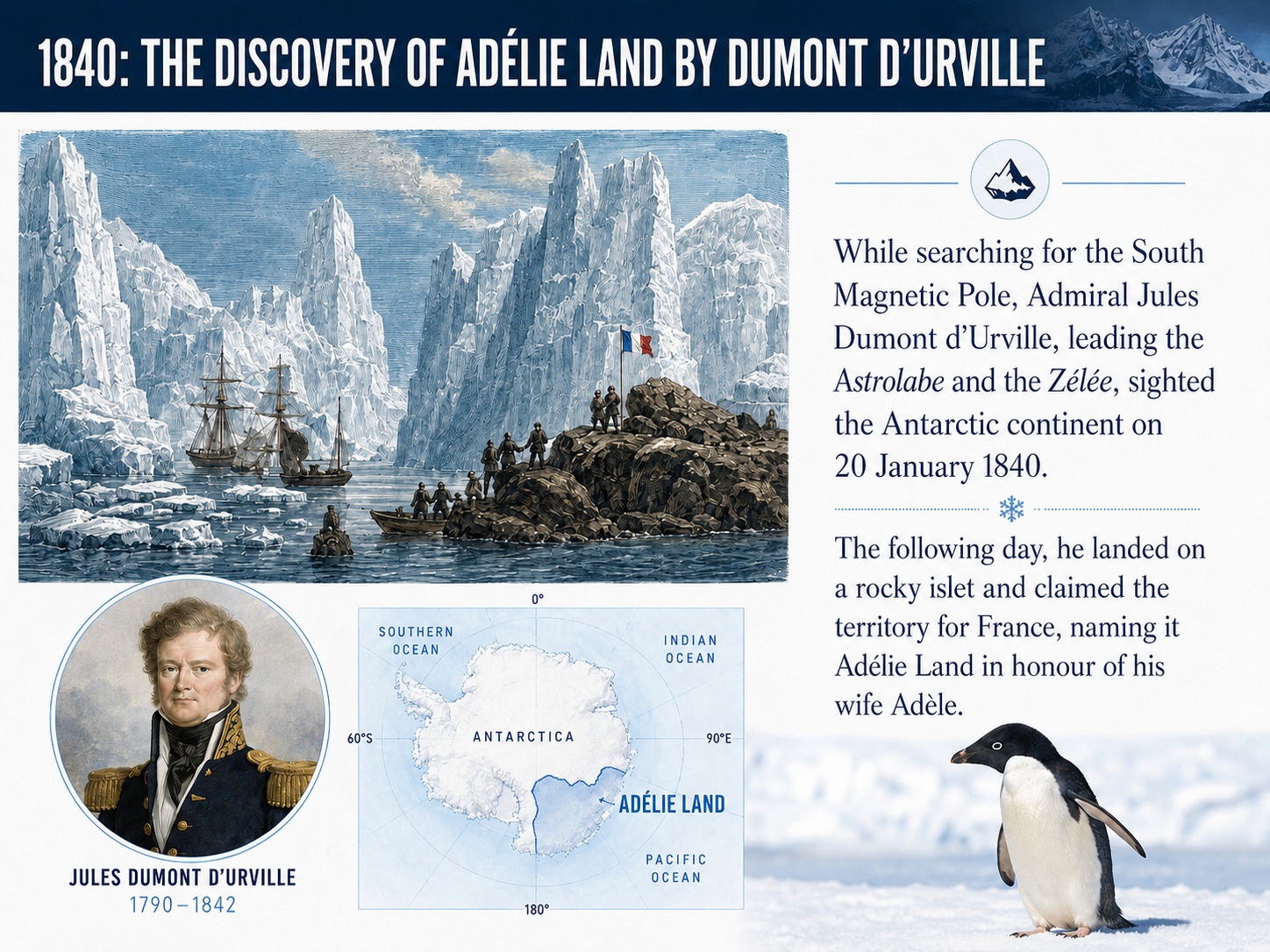
The discovery of Adélie Land by Dumont d’Urville. Source: Laurent Mayet / Le Cercle Polaire presentation.
Before 1959, seven states formally claimed parts of Antarctica: the United Kingdom, New Zealand, France, Australia, Norway, Chile and Argentina. Some claims overlapped, especially on the Antarctic Peninsula. This situation could have created serious rivalry.
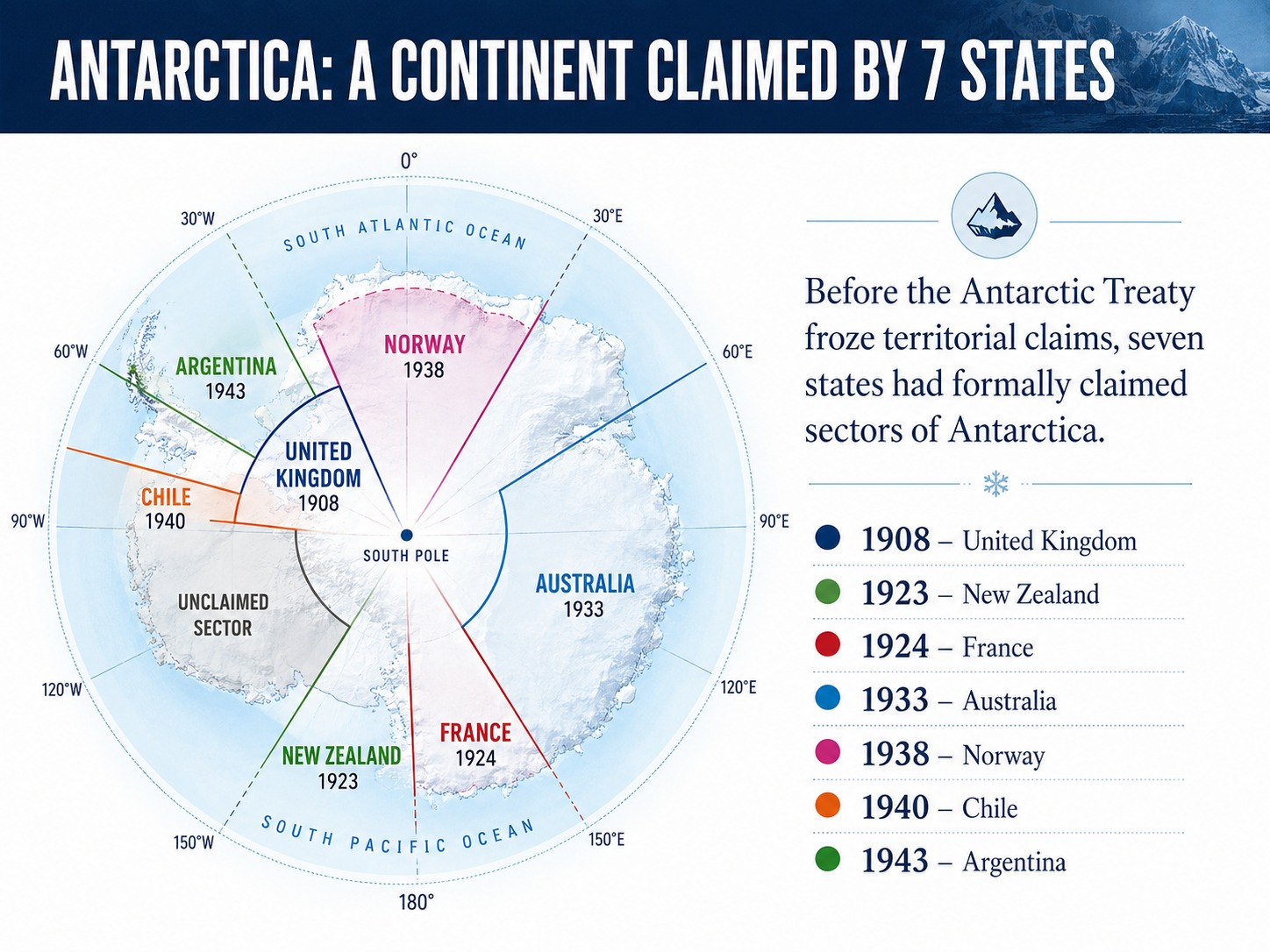
The key lesson is that Antarctica did not become peaceful because there were no interests there. It became peaceful because states made a political choice: they chose to suspend the most dangerous consequences of territorial rivalry.
Key timeline
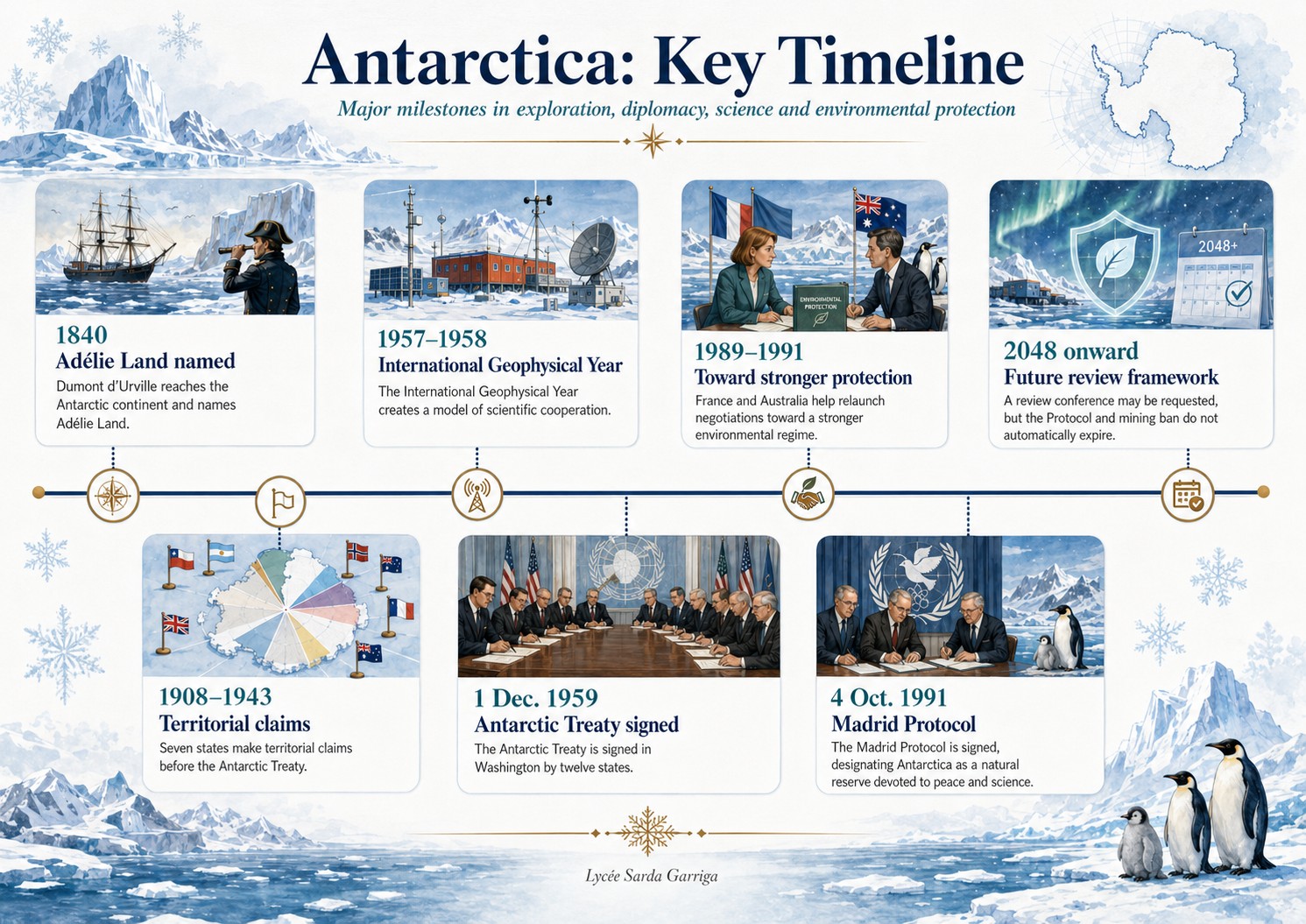
2. The Antarctic Treaty: a diplomatic invention
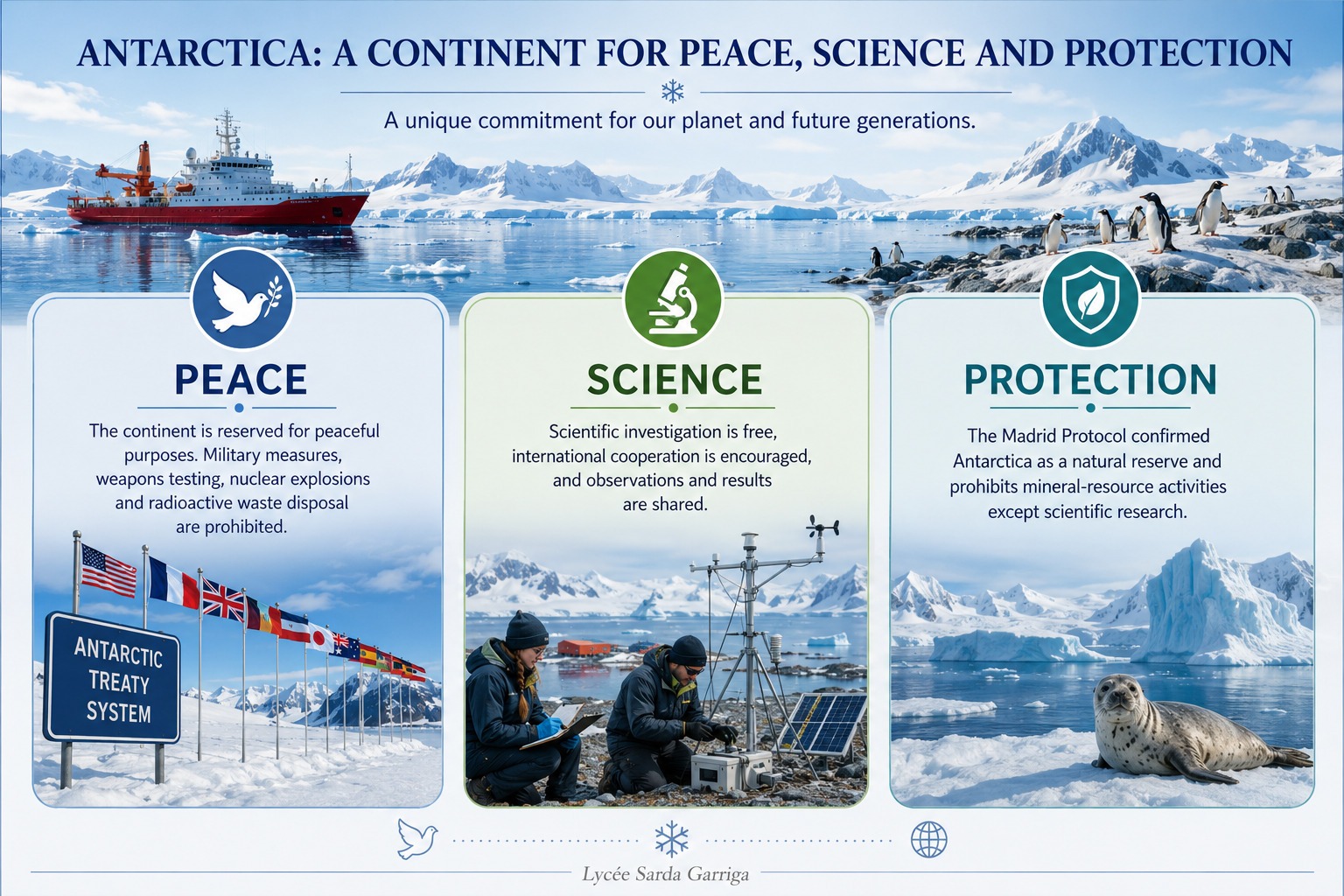
The Antarctic Treaty was signed in Washington on 1 December 1959 by twelve countries active in Antarctica during the International Geophysical Year. Its first achievement was to make Antarctica a place for peaceful purposes only.
The Treaty protects science by affirming freedom of scientific investigation and encouraging international cooperation. Scientific observations and results are to be exchanged and made freely available. This is essential because polar science depends on long-term data, international teams and shared logistics.
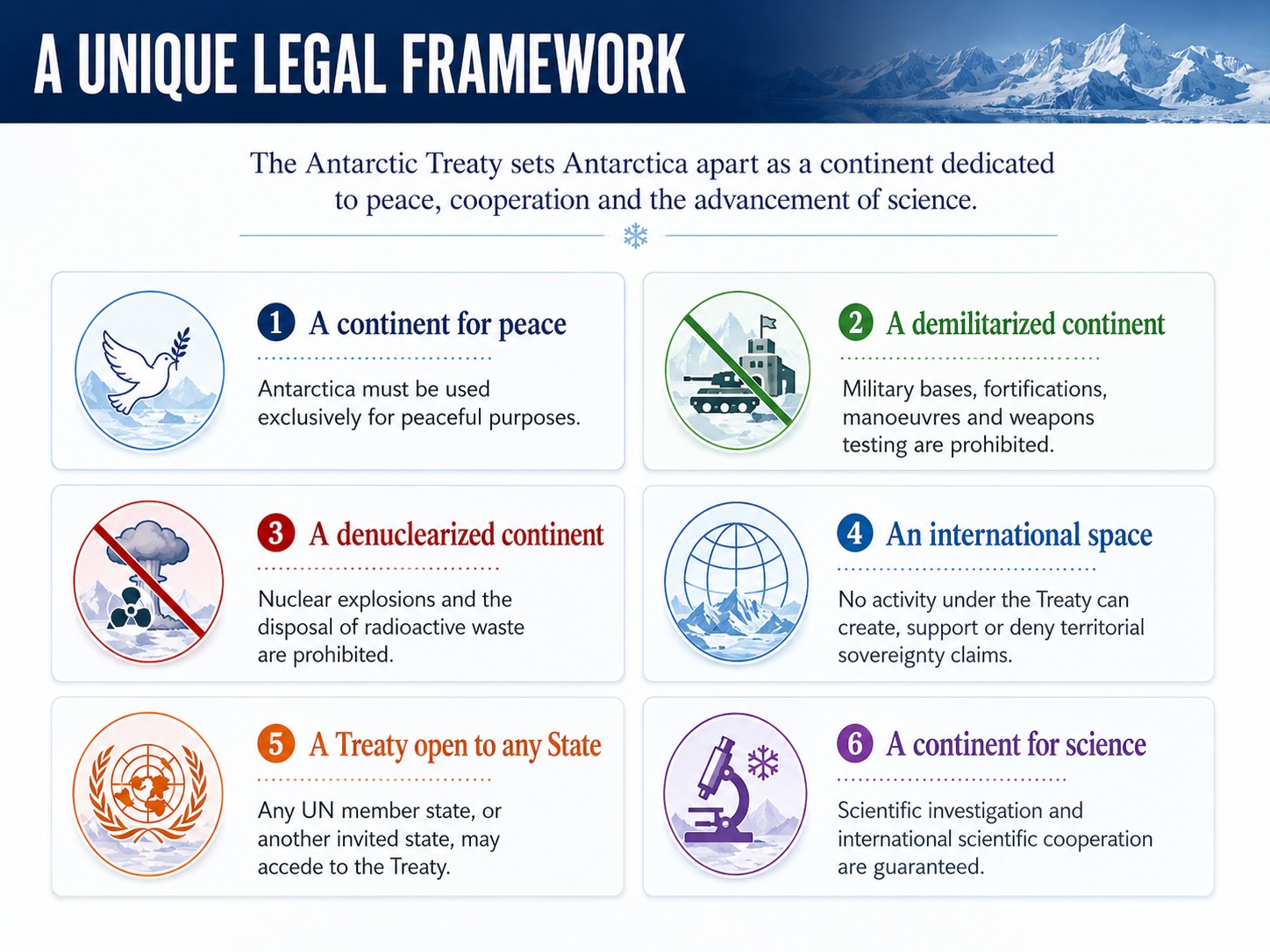
The Antarctic Treaty created a unique legal framework based on peace, science and frozen sovereignty claims. Source: Laurent Mayet / Le Cercle Polaire presentation.
| Principle | Meaning |
|---|---|
| Peace | Antarctica is reserved for peaceful purposes. |
| Science | Scientific investigation and cooperation are protected. |
| No nuclear activity | Nuclear explosions and radioactive waste disposal are prohibited. |
| Frozen claims | Existing positions are protected, but no new claim can be made. |
| Openness | The Treaty is open to other states that accede to it. |
3. The Madrid Protocol: protecting a natural reserve
The Antarctic Treaty created peace and scientific cooperation, but the environment needed stronger protection. The Madrid Protocol, signed on 4 October 1991 and in force since 1998, strengthened environmental protection and placed the environment at the centre of all activities in Antarctica.
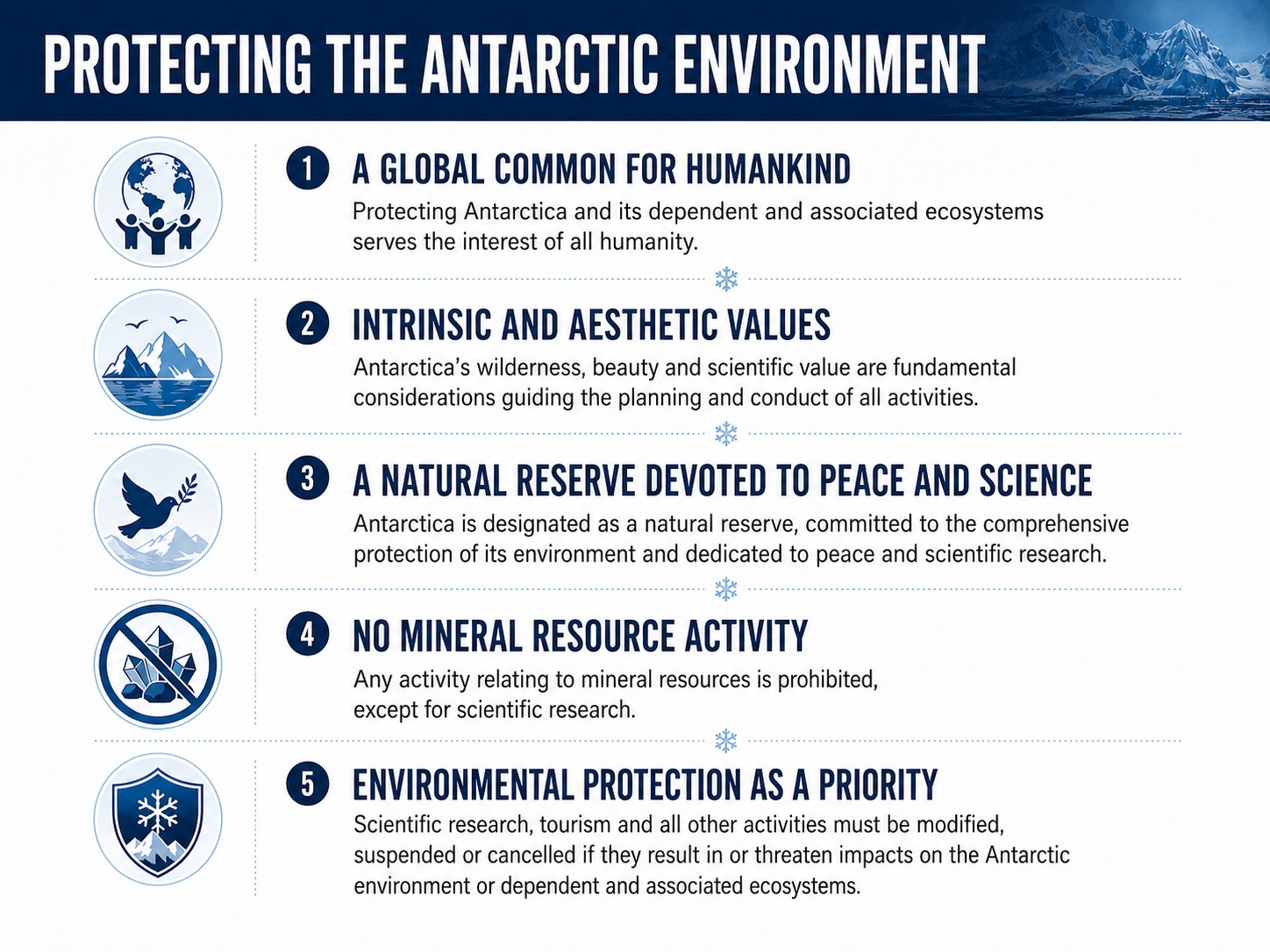
The Madrid Protocol confirmed Antarctica as a natural reserve devoted to peace and science. Source: Laurent Mayet / Le Cercle Polaire presentation.
The Protocol recognizes the intrinsic, wilderness and aesthetic value of Antarctica. It prohibits activities relating to mineral resources, except scientific research, and requires activities to be modified, suspended or cancelled if they threaten the Antarctic environment or dependent ecosystems.
2048 is not an automatic opening to mining. From 2048, a consultative party may request a review conference, but the Protocol does not simply expire. The year 2048 is therefore a political test of whether states will continue to defend restraint.
4. Main threats to the Antarctic model
Climate change: the threat Antarctica did not choose
The most serious threat to Antarctica is climate change. Unlike a territorial dispute, climate change cannot be solved only by writing a treaty for Antarctica. It is driven by global greenhouse-gas emissions and ocean-atmosphere changes.
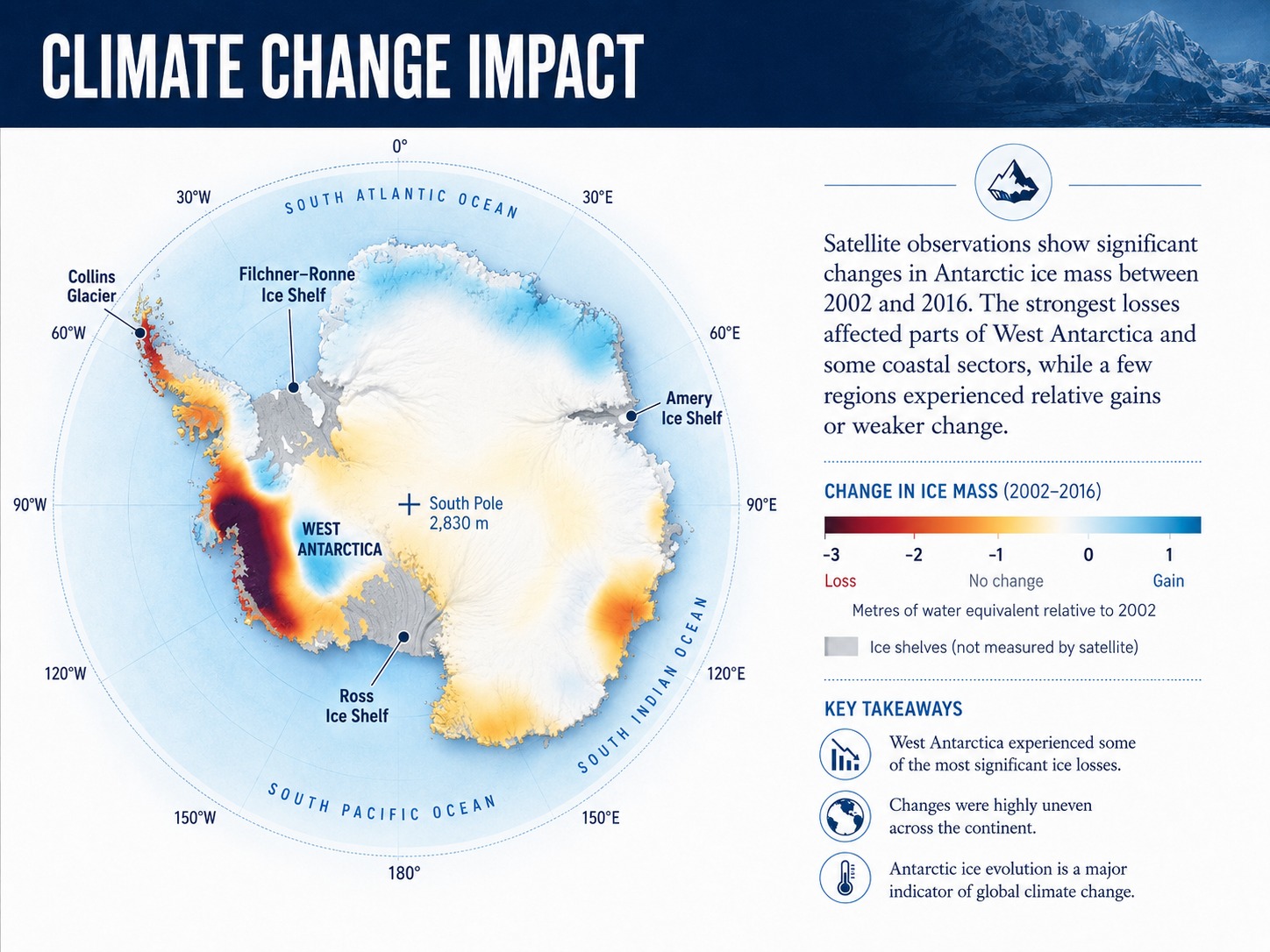
Climate change is one of the strongest threats to Antarctica’s ice and ecosystems. Source: Laurent Mayet / Le Cercle Polaire presentation.
Protecting Antarctica therefore requires global climate action. It is not enough to ban mining or regulate tourism if the planet continues to warm. Antarctica is both a victim of climate change and a warning system for the rest of the world.
Tourism: discovering without damaging
Tourism can help people understand Antarctica, but it also creates environmental pressure. Visitor growth raises the question of stricter management, including landing rules, biosecurity controls, limits at sensitive sites, waste management and transparent reporting.
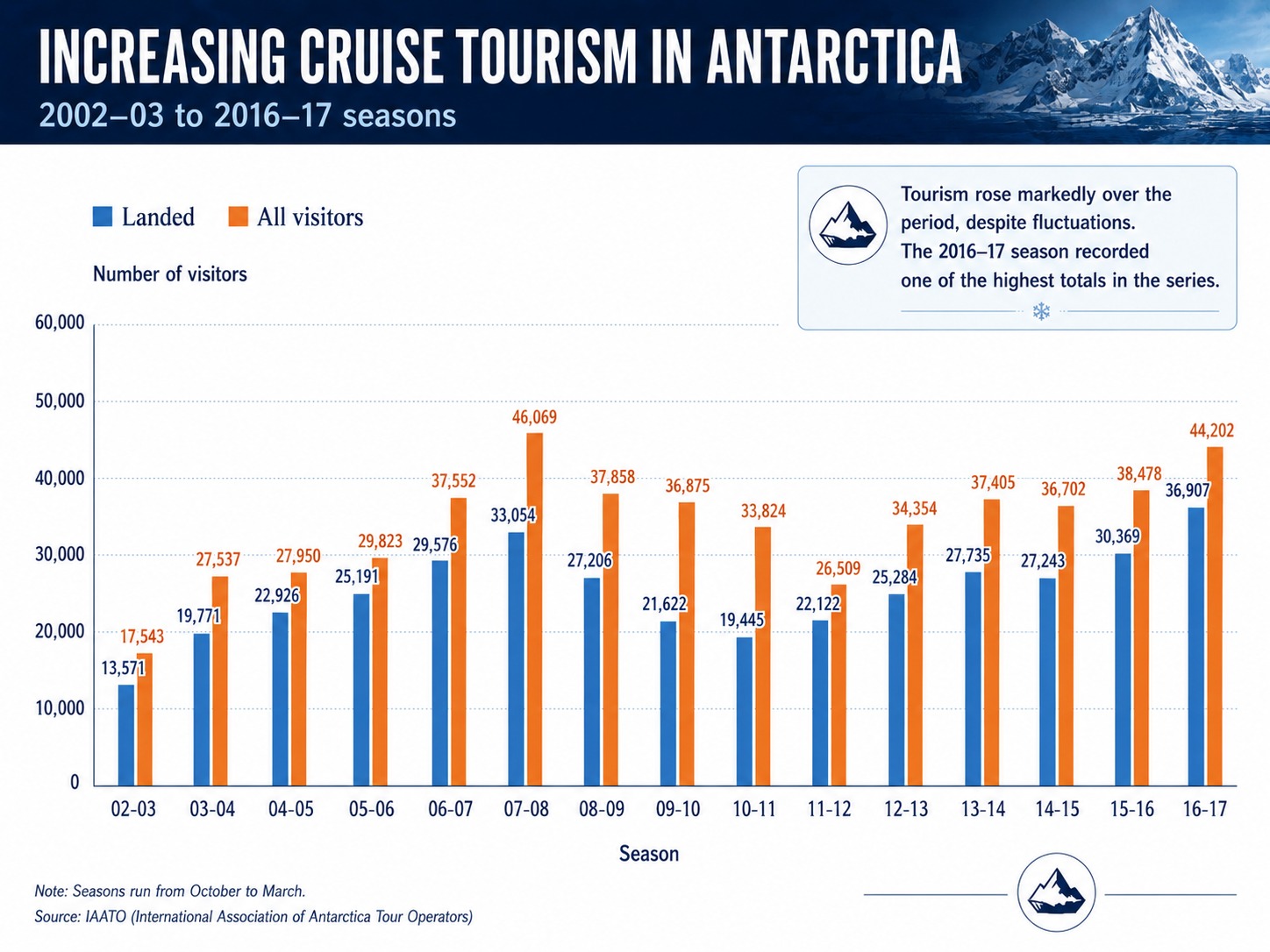
Cruise tourism has increased, raising the question of stricter visitor management. Source: Laurent Mayet / Le Cercle Polaire presentation.
A continent for peace and science should not become a theme park. The challenge is not to reject all tourism, but to manage it so that impacts remain minor and temporary.
Resource pressure and the 2048 debate
Global demand for energy and natural resources creates long-term pressure. This is why the mining ban is so important. The continent’s value as a climate regulator, scientific archive and natural reserve is far greater than short-term extraction.
Geopolitics: peaceful rules under stress
The degradation of multilateralism, new stations, strategic interest and military rhetoric all show that the rules of peace require vigilance. The Treaty system depends on inspections, transparency, scientific cooperation and trust.
5. A student proposal: five priorities for the future
A high school contest report should not only describe the problem. It should propose a position. These five priorities can form a youth charter for Antarctica.
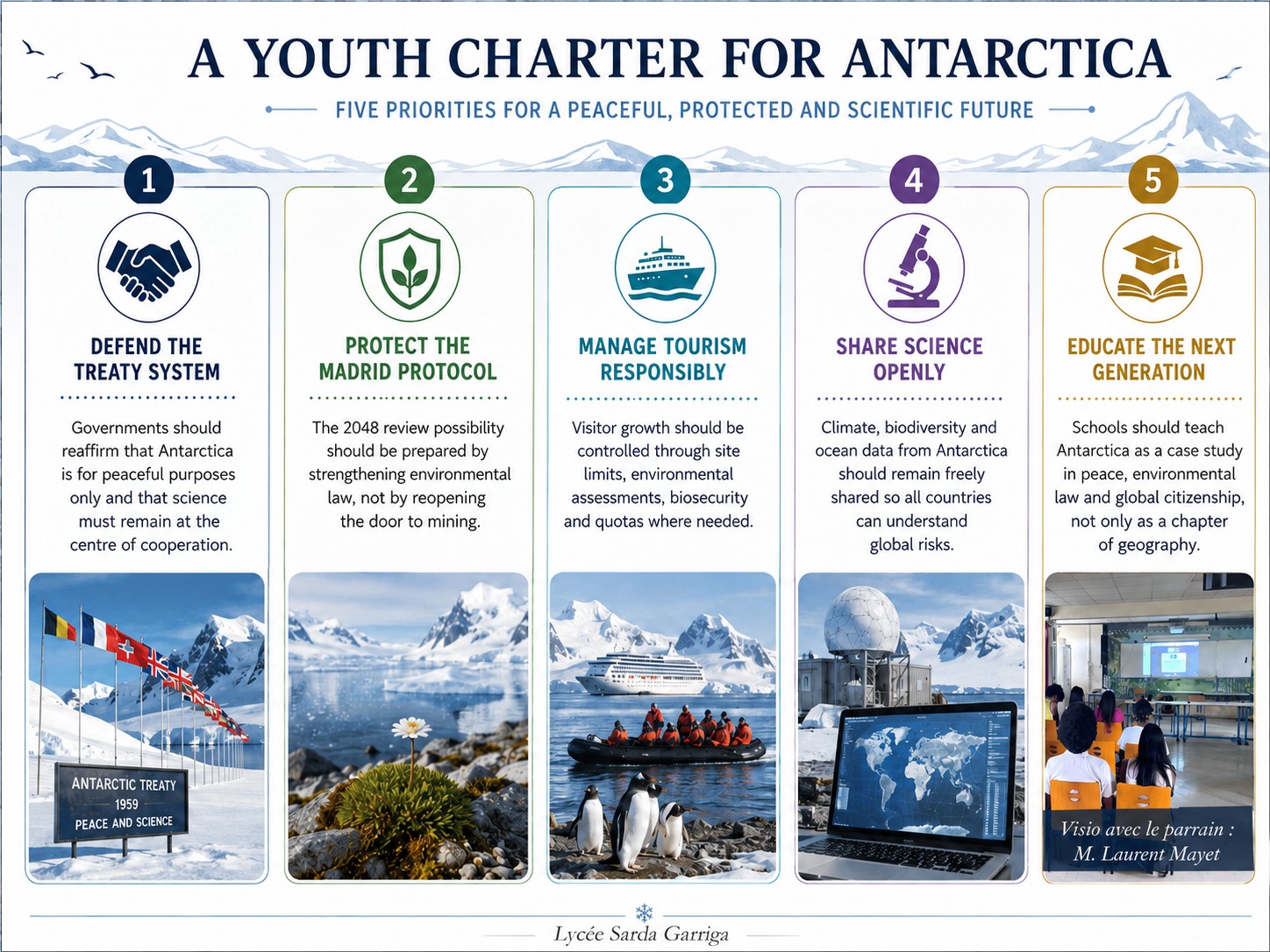
Contest message
Antarctica teaches us that peace is not the absence of conflict; it is the decision to manage disagreement through law, science and responsibility.
For young people, Antarctica is not only a distant white continent. It is a question about the future: can we protect what belongs to everyone before it is damaged by everyone? A continent for peace and science will survive only if each generation chooses to defend it.
Oral pitch
Bibliography and source notes
- Working theme no. 6: Antarctica, a continent for peace.
- Laurent Mayet / Le Cercle Polaire, Antarctica, a land for peace and science. Yes, but until when? Used for geopolitical content, illustrations and the adviser profile.
- Secretariat of the Antarctic Treaty: official overview of the Antarctic Treaty, parties and environmental protocol.
- International Association of Antarctica Tour Operators (IAATO): overview of Antarctic vessel tourism.
- NASA Scientific Visualization Studio and NASA Earth Observatory: Antarctic ice mass loss and sea ice observations.
Mise à jour : juin 2026